

In the realm of electrical systems, the seamless interaction between various protective devices is crucial for ensuring safety, reliability, and efficient operation. As a prominent supplier of China fuses, I have witnessed firsthand the significance of how these fuses interact with other protective devices to safeguard electrical circuits and equipment. In this blog post, I will delve into the intricate ways in which China fuses collaborate with other protective devices, exploring their functions, advantages, and real - world applications.
Understanding the Basics of China Fuses
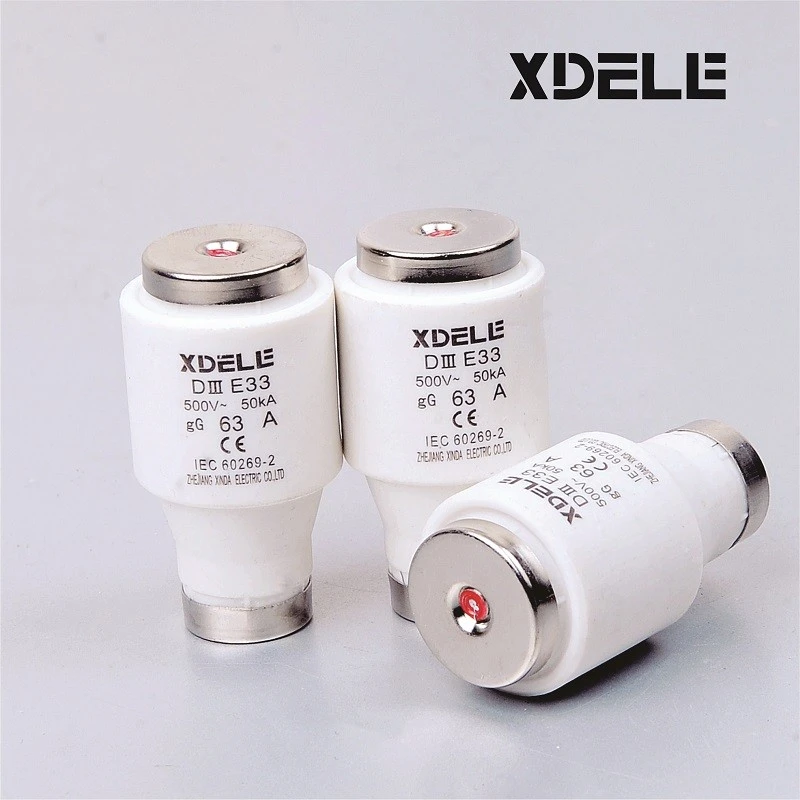
Before we discuss their interaction with other protective devices, let's first understand what China fuses are. Fuses are fundamental protective devices in electrical circuits. They consist of a metal strip or wire that melts when excessive current flows through it, thereby interrupting the circuit and preventing damage to the electrical equipment. China fuses are known for their high - quality materials, precision manufacturing, and strict adherence to international standards. They come in a wide range of types, including cartridge fuses, blade fuses, and screw fuses such as the R022 E33 DIII Screw Fuse, D01 RL6 - 16 Screw Fuse, and D03 RL6 - 63 Screw Fuse.
Interaction with Circuit Breakers
Circuit breakers are another essential type of protective device in electrical systems. They automatically open the circuit when an overcurrent or short - circuit occurs. China fuses and circuit breakers often work together in a complementary manner.
Backup Protection
Fuses can serve as backup protection for circuit breakers. In some cases, a circuit breaker may fail to trip due to mechanical or electrical issues. In such situations, the fuse will act as a failsafe. When the current exceeds a certain level for an extended period, the fuse will melt and break the circuit, preventing further damage. For example, in industrial electrical systems where large amounts of power are involved, a combination of circuit breakers and fuses can provide a multi - layer protection mechanism.
Coordination
Proper coordination between fuses and circuit breakers is essential to ensure selective tripping. Selective tripping means that only the protective device closest to the fault should operate, isolating the faulty part of the circuit while keeping the rest of the system running. China fuses are designed with specific time - current characteristics that can be coordinated with the tripping curves of circuit breakers. This allows for a more efficient and reliable protection system, minimizing downtime and reducing the cost of maintenance.
Interaction with Surge Protective Devices (SPDs)
Surge Protective Devices are used to protect electrical equipment from voltage surges caused by lightning strikes, switching operations, or other transient events. China fuses play an important role in the overall protection scheme when used in conjunction with SPDs.
Overcurrent Protection for SPDs
SPDs can draw a large amount of current during a surge event. If this current is not properly controlled, it can damage the SPD itself. Fuses can be used to provide overcurrent protection for SPDs. When the current through the SPD exceeds the rated current of the fuse, the fuse will blow, preventing the SPD from being damaged by excessive current.
System - Level Protection
Combining fuses and SPDs can provide comprehensive system - level protection. Fuses protect against long - term overcurrents, while SPDs protect against short - term voltage surges. This combination ensures that electrical equipment is protected from a wide range of electrical hazards, enhancing the overall reliability and safety of the system.
Interaction with Relays
Relays are electromagnetic switches that are used to control electrical circuits. They can be used for various purposes, such as signal amplification, isolation, and control. China fuses can interact with relays in several ways.
Protection for Relay Coils
Relay coils can be damaged by excessive current. Fuses can be used to protect the relay coils from overcurrent conditions. When the current through the relay coil exceeds the rated current of the fuse, the fuse will melt, preventing damage to the relay coil.
Control Circuit Protection
In control circuits, fuses can be used to protect the entire circuit from short - circuits or overcurrents. If a fault occurs in the control circuit, the fuse will blow, isolating the faulty part of the circuit and preventing damage to other components in the control system.
Real - World Applications
The interaction between China fuses and other protective devices has numerous real - world applications in various industries.
Industrial Applications
In industrial settings, electrical systems are often complex and require a high level of protection. For example, in manufacturing plants, a combination of fuses, circuit breakers, SPDs, and relays is used to protect motors, transformers, and other critical equipment. China fuses, with their high - quality and reliable performance, are widely used in these applications to ensure the safety and efficiency of the industrial electrical systems.
Residential Applications
In residential buildings, fuses and circuit breakers are commonly used in the electrical distribution panels. Fuses can provide an additional layer of protection, especially in older electrical systems. In addition, surge protectors are often used to protect household appliances from voltage surges. The combination of these protective devices helps to ensure the safety of the residents and the proper functioning of the electrical equipment in the home.
Renewable Energy Applications
In renewable energy systems such as solar and wind power plants, the interaction between fuses and other protective devices is also crucial. Fuses can protect the inverters, batteries, and other components from overcurrents, while SPDs can protect against lightning - induced surges. This combination of protection devices helps to improve the reliability and efficiency of renewable energy systems.
Advantages of Using China Fuses in Combination with Other Protective Devices
There are several advantages to using China fuses in combination with other protective devices.
Cost - Effectiveness
China fuses are generally more cost - effective compared to some other types of protective devices. By using fuses in combination with other protective devices, a comprehensive protection system can be achieved at a lower cost. This makes it an attractive option for both large - scale industrial projects and small - scale residential applications.
High - Quality and Reliability
China fuses are manufactured with high - quality materials and advanced production techniques. They are designed to meet international standards and have a high level of reliability. When used in combination with other protective devices, they can enhance the overall performance and reliability of the protection system.

Flexibility
China fuses come in a wide range of types and ratings, which provides flexibility in designing protection systems. They can be easily integrated with other protective devices to meet the specific requirements of different applications.
Conclusion
In conclusion, the interaction between China fuses and other protective devices is a complex but essential aspect of electrical system design. By working together, these protective devices can provide comprehensive protection against a wide range of electrical hazards, ensuring the safety, reliability, and efficiency of electrical systems. Whether in industrial, residential, or renewable energy applications, the combination of China fuses with other protective devices offers numerous advantages.
If you are interested in learning more about our China fuses and how they can be integrated with other protective devices in your electrical systems, please feel free to contact us for procurement and further discussions. We are committed to providing high - quality products and professional technical support to meet your specific needs.
References
- Blackburn, J. L., & Domin, D. M. (2015). Protective Relaying: Principles and Applications. CRC Press.
- IEEE Standard C37.100.1 - 2018, IEEE Standard Definitions for Power Switchgear.
- IEC 60269 - 1:2012, Low - voltage fuses - Part 1: General requirements.