

A fuse is a crucial component in a power supply system, serving as a safety device that protects electrical circuits from damage caused by excessive current. In this blog post, we'll delve into what a fuse is, how it works, its different types, and why it's an essential part of any electrical setup. As a leading fuses supplier, we'll also introduce some of our high - quality fuse products.
What is a Fuse?
At its core, a fuse is a short length of wire designed to melt and separate in the event of excessive current flow. It is placed in series with the electrical circuit it is intended to protect. When the current passing through the fuse exceeds its rated value, the wire heats up due to the Joule effect (the heat generated in a conductor is proportional to the square of the current flowing through it and the resistance of the conductor). Once the wire reaches its melting point, it breaks the circuit, thereby preventing further current flow and protecting the connected electrical equipment from damage.
How Does a Fuse Work?
The operation of a fuse is based on the principle of electrical resistance and heat generation. All conductors, including the wire in a fuse, have some resistance. When an electric current passes through a conductor, it encounters this resistance, which causes the conductor to heat up. Under normal operating conditions, the current flowing through the fuse is within its rated capacity, and the heat generated is dissipated into the surrounding environment without causing the wire to melt.
However, if there is a fault in the circuit, such as a short - circuit or an overload, the current can increase significantly. This sudden increase in current leads to a rapid rise in temperature within the fuse wire. Once the temperature reaches the melting point of the wire, the wire melts, creating an open circuit. This interruption of the current flow stops the power supply to the faulty part of the circuit, preventing potential damage to other components and reducing the risk of fire.
Types of Fuses
There are several types of fuses available, each designed for specific applications and electrical systems. Here are some common types:
Cartridge Fuses
These are cylindrical in shape and have metal caps at both ends. Cartridge fuses are commonly used in industrial and commercial electrical systems. They come in different sizes and current ratings, making them suitable for a wide range of applications.
Blade Fuses
Blade fuses are flat and rectangular in shape, with two prongs that fit into a fuse holder. They are widely used in automotive electrical systems, as well as in some household appliances. Blade fuses are color - coded to indicate their current rating, making it easy to identify and replace them.
Screw Fuses
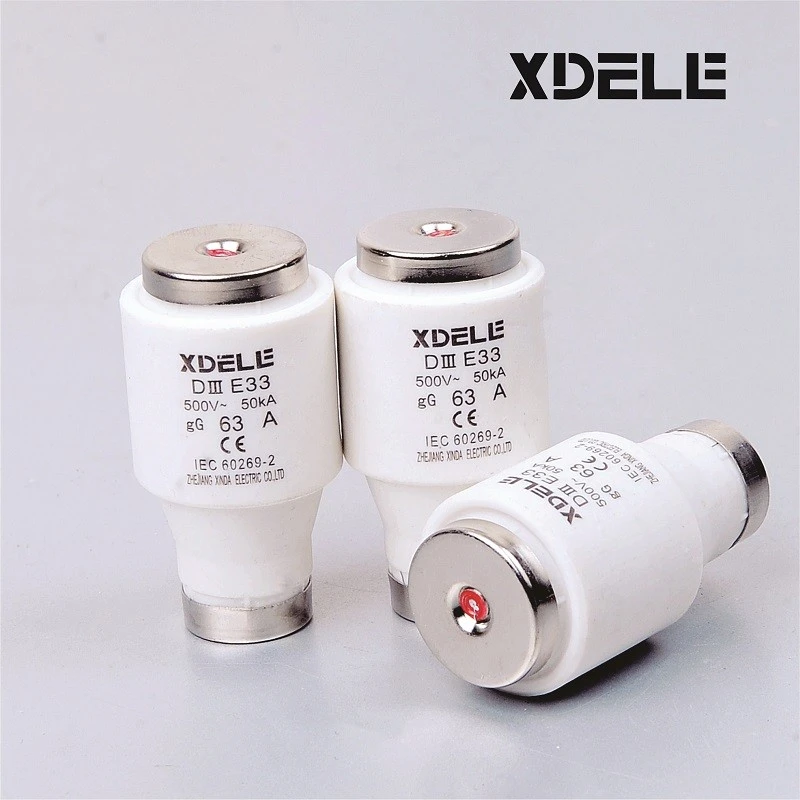
Screw fuses have a threaded base that can be screwed into a fuse socket. They are often used in older electrical systems and some residential applications. Screw fuses are available in various current ratings and are relatively easy to install and replace. For example, we offer the R022 E33 DIII Screw Fuse, the D02 RL6 - 32 Screw Fuse, and the D03 RL6 - 63 Screw Fuse. These screw fuses are designed to provide reliable over - current protection for different electrical circuits.
Resettable Fuses
Also known as polymeric positive temperature coefficient (PPTC) devices, resettable fuses can automatically reset after a fault condition has been cleared. When the current exceeds the rated value, the resistance of the PPTC device increases significantly, reducing the current flow. Once the fault is removed and the current returns to normal, the resistance of the device decreases, allowing the circuit to resume normal operation.
Importance of Fuses in Power Supplies
Fuses play a vital role in power supply systems for several reasons:
Protection Against Overloads
Overloads occur when the current flowing through a circuit exceeds its normal operating capacity. This can happen due to factors such as excessive use of electrical appliances or a malfunction in a device. Fuses protect the circuit from damage by interrupting the current flow when an overload occurs.
Prevention of Short - Circuits
A short - circuit is a fault that occurs when two conductors that are not supposed to be connected come into contact with each other. This can cause a large amount of current to flow through the circuit, leading to overheating and potential damage. Fuses are designed to quickly detect and interrupt the current in the event of a short - circuit, preventing further damage to the electrical system.
Safety
Fuses are an important safety feature in electrical systems. By preventing over - current conditions, they reduce the risk of electrical fires and electrical shock. This is especially important in residential, commercial, and industrial settings where there are many electrical devices and potential hazards.

Our Fuse Products
As a fuses supplier, we offer a wide range of high - quality fuses to meet the diverse needs of our customers. Our fuses are manufactured using the latest technology and high - quality materials to ensure reliable performance and long - term durability.
Our screw fuses, such as the R022 E33 DIII Screw Fuse, D02 RL6 - 32 Screw Fuse, and D03 RL6 - 63 Screw Fuse, are carefully tested to ensure they meet or exceed industry standards. They are suitable for a variety of applications, from small household electrical systems to large industrial power supplies.
Contact Us for Procurement
If you are in need of high - quality fuses for your electrical projects, we invite you to contact us for procurement. Our team of experts is ready to assist you in selecting the right fuses for your specific requirements. Whether you need a small quantity for a DIY project or a large order for an industrial application, we can provide you with the best solutions at competitive prices. Reach out to us to start a procurement discussion and ensure the safety and reliability of your electrical systems.
References
- "Electrical Engineering Handbook", Third Edition, edited by Richard C. Dorf.
- "Fundamentals of Electric Circuits", Charles K. Alexander and Matthew N. O. Sadiku.