

Hey there, folks! As a supplier of car charging pile fuses, I've seen my fair share of issues related to fuses blowing in a car's on - board charging system. Today, I wanna chat about the impact of a blown fuse on this system.
First off, let's understand what a fuse is and what it does. A fuse is a simple yet crucial safety device in any electrical system, including a car's on - board charging system. Its main job is to protect the electrical components from getting damaged due to excessive current. It's like a little hero that sacrifices itself when things get too crazy on the electrical side. Inside a fuse, there's a thin metal strip. When the current passing through it exceeds a certain limit (the rated current of the fuse), this metal strip melts, breaking the electrical circuit.
So, what happens when a fuse blows in the car's on - board charging system? Well, the most obvious impact is that the charging process comes to a sudden halt. That's right, if you're in the middle of charging your electric vehicle (EV) and a fuse blows, your charger will stop working. You'll be left with a partially charged car, which can be a real pain, especially if you were counting on a full charge for your next trip.
The reason behind this is pretty straightforward. Since the fuse has broken the electrical circuit, the power can no longer flow from the charging source to the car's battery. It's like cutting a water pipe; the water (or in this case, electricity) can't get through.
But it's not just about the interrupted charging. A blown fuse can also indicate underlying problems in the charging system. There could be a short - circuit somewhere in the wiring. A short - circuit occurs when a low - resistance path is created for the current, which can cause a huge spike in current flow. This could be due to damaged insulation on the wires, loose connections, or even water ingress into the electrical components.
Overloading is another common culprit. If you're trying to charge your car at a higher current rate than the system can handle, it can cause the fuse to blow. For example, if your on - board charger is rated for a certain amperage, and you use a charging station that supplies a much higher current, the fuse will act as a safeguard and blow to prevent damage to the charger and the battery.

Now, when a fuse blows, it's not just a matter of replacing it and moving on. You need to diagnose the root cause of the problem. Otherwise, the new fuse will just blow again. This might involve checking the wiring for any signs of damage, making sure all connections are tight, and verifying that the charging equipment is compatible with your car.
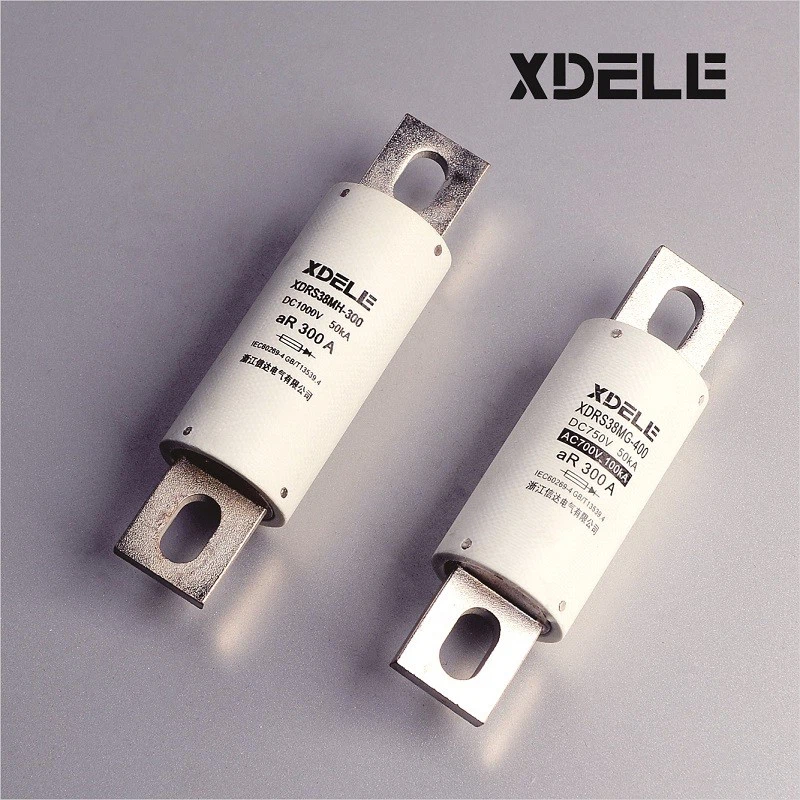
As a car charging pile fuse supplier, we offer a range of high - quality fuses to meet different needs. For instance, we have the DC1000V Electric Vehicle Fuse Link. This fuse is designed to handle high - voltage DC charging, which is becoming more and more common in modern EVs. It provides reliable protection for the on - board charging system and other electrical components in the car.
We also have the DC750V Electric Vehicle Fuse Link. This is suitable for applications where a lower DC voltage is used. Whether you're a car manufacturer, a charging station operator, or an individual looking to replace a blown fuse in your car, we've got you covered.
A blown fuse in the car's on - board charging system can have a significant impact. It can disrupt your charging plans and may be a sign of more serious issues. But with the right fuses and proper diagnosis, you can keep your EV's charging system running smoothly.
If you're in the market for car charging pile fuses, don't hesitate to reach out to us. We're here to help you find the right fuses for your specific needs. Whether you have questions about our products, need technical support, or are interested in bulk purchasing, we're just a contact away. Let's work together to ensure the safety and efficiency of your car's on - board charging system.
References
- Grob, B. (2007). Basic Electronics. McGraw - Hill Education.
- Fitzgerald, A. E., Kingsley, Jr., C., & Umans, S. D. (2011). Electric Machinery. McGraw - Hill Education.