

As a supplier of NH fuses, I am often asked whether NH fuses have over - current protection. In this blog, I will delve into this question, exploring the principles, characteristics, and applications of NH fuses in over - current protection.
Understanding Over - Current Protection
Before discussing whether NH fuses have over - current protection, it is essential to understand what over - current protection means. Over - current refers to a situation where the current flowing through an electrical circuit exceeds the rated current of the circuit components. This can be caused by various factors, such as short - circuits, overloads, or faults in electrical equipment. Over - current can lead to overheating, damage to electrical components, and even pose a fire hazard.
Over - current protection devices are designed to detect over - current conditions and interrupt the circuit to prevent damage to the equipment and ensure the safety of the electrical system. Common over - current protection devices include fuses, circuit breakers, and relays.
What are NH Fuses?
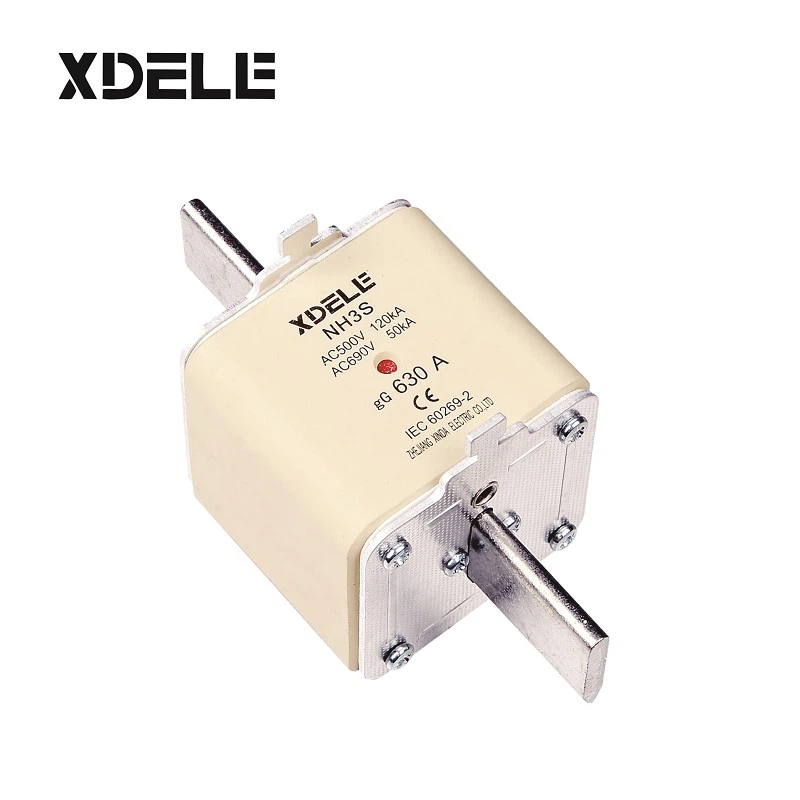
NH fuses are a type of high - rupturing - capacity (HRC) fuses widely used in industrial and commercial electrical systems. The "NH" designation comes from the German term "Nennhöchststrom," which means rated maximum current. NH fuses are known for their high breaking capacity, reliable performance, and long service life.
They are available in various sizes and ratings to meet different application requirements. For example, we offer NH3 with Indicator Fuse Link, NT/NH00 Fuse Link, and NH1 with Indicator Fuse Link, each with its own specific characteristics and applications.
How NH Fuses Provide Over - Current Protection
NH fuses work based on the principle of thermal and electrical effects. Inside the fuse, there is a fuse element made of a material with a low melting point, such as copper or silver. When the current flowing through the fuse exceeds its rated current, the fuse element heats up due to the Joule effect (the heat generated is proportional to the square of the current and the resistance of the element).
As the temperature of the fuse element rises, it eventually reaches its melting point, and the element melts, breaking the electrical circuit. This interruption of the circuit stops the flow of over - current, protecting the electrical equipment downstream from damage.
The time it takes for the fuse to blow depends on the magnitude of the over - current. For small over - currents, the fuse may take some time to heat up and melt, providing a time - delay function. This is useful in applications where temporary current surges are normal, such as when starting motors. For large over - currents, such as those caused by short - circuits, the fuse will blow almost instantaneously, providing fast protection.

Characteristics of NH Fuses in Over - Current Protection
- High Breaking Capacity: NH fuses have a high breaking capacity, which means they can safely interrupt high - fault currents without causing an explosion or damage to the surrounding environment. This is crucial in industrial electrical systems where short - circuit currents can be very large.
- Reliable Performance: NH fuses are designed to provide reliable over - current protection over a long period. They are tested and certified to meet international standards, ensuring their quality and performance.
- Selectivity: NH fuses can be selected based on the specific requirements of the electrical system to achieve selectivity. Selectivity means that in a multi - level electrical distribution system, only the fuse closest to the fault will blow, while the upstream fuses remain intact. This minimizes the impact of the fault on the entire system and reduces downtime.
- Indicator Function: Some NH fuses, such as the NH3 with Indicator Fuse Link and NH1 with Indicator Fuse Link, are equipped with an indicator. The indicator can show whether the fuse has blown, making it easy for maintenance personnel to quickly identify and replace the faulty fuse.
Applications of NH Fuses in Over - Current Protection
NH fuses are widely used in various industrial and commercial applications for over - current protection:
- Power Distribution Systems: In industrial power distribution systems, NH fuses are used to protect transformers, switchgear, and distribution panels from over - current. They ensure the safe and reliable operation of the power grid.
- Motor Protection: Motors often draw high starting currents, which can be several times the rated current. NH fuses with time - delay characteristics can be used to protect motors from overloads and short - circuits while allowing the normal starting current to pass through.
- Industrial Equipment: NH fuses are also used to protect various industrial equipment, such as generators, rectifiers, and welding machines. They prevent damage to these expensive equipment due to over - current.
Advantages of Choosing NH Fuses from Our Company
As a professional NH fuse supplier, we offer several advantages:
- High - Quality Products: Our NH fuses are made from high - quality materials and manufactured using advanced production processes. They are rigorously tested to ensure they meet or exceed international standards.
- Wide Range of Products: We have a wide range of NH fuses available, including different sizes, ratings, and types. Whether you need a small - rated fuse for a control circuit or a high - rated fuse for a large - scale industrial application, we can provide the right solution.
- Technical Support: Our team of experts can provide technical support and advice on the selection, installation, and maintenance of NH fuses. We can help you design the most suitable over - current protection system for your specific needs.
Conclusion
In conclusion, NH fuses do have over - current protection capabilities. They are an effective and reliable solution for protecting electrical systems from over - current damage. With their high breaking capacity, reliable performance, and selectivity, NH fuses are widely used in various industrial and commercial applications.
If you are looking for high - quality NH fuses for your over - current protection needs, we are here to help. We invite you to contact us for procurement and further discussion. Our team will be happy to assist you in finding the best NH fuse products for your specific requirements.
References
- IEC 60269 - 1: Low - voltage fuses - Part 1: General requirements
- IEC 60269 - 2 - 1: Low - voltage fuses - Part 2 - 1: Supplementary requirements for fuses for industrial and commercial applications (excluding those for household and similar applications) and for fuses for semiconductor devices