

Hey there! As a supplier of NH HRC fuses, I've seen firsthand how self - heating can have a significant impact on the performance of these crucial electrical components. In this blog, I'm gonna break down what self - heating is, how it affects NH HRC fuses, and why it matters to you.
Let's start with the basics. Self - heating in NH HRC fuses occurs when electrical current passes through the fuse element. Just like when you rub your hands together, the flow of electrons through the fuse creates friction, which in turn generates heat. This is a natural consequence of the electrical resistance of the fuse element.
Now, you might be wondering, "So what? A little heat is normal, right?" Well, yes and no. A certain amount of self - heating is expected and is factored into the design of NH HRC fuses. But when the self - heating gets out of control, it can spell trouble.
One of the primary ways self - heating affects NH HRC fuses is by altering their electrical characteristics. As the temperature of the fuse element rises due to self - heating, its resistance also increases. This is because the atoms in the conductor vibrate more vigorously at higher temperatures, making it harder for electrons to flow through. According to Ohm's law (V = IR), an increase in resistance (R) with a constant voltage (V) means a decrease in current (I). However, in a real - world electrical circuit, the load often demands a certain amount of current. So, if the fuse's resistance goes up due to self - heating, it can lead to an imbalance in the circuit.
This change in resistance can also affect the fuse's melting time. NH HRC fuses are designed to melt and break the circuit when a certain level of overcurrent occurs. But if self - heating has already raised the temperature of the fuse element, it may melt at a lower current than its rated value. This is known as pre - arcing, and it can cause the fuse to trip prematurely, leading to unnecessary downtime in your electrical system.
Another significant impact of self - heating is on the mechanical integrity of the fuse. When the fuse element heats up, it expands. Repeated cycles of heating and cooling can cause mechanical stress on the fuse and its housing. Over time, this stress can lead to cracks in the fuse body or loosen the connections. A loose connection further increases resistance, which in turn leads to more self - heating, creating a vicious cycle. Eventually, this can result in a complete failure of the fuse, and in some cases, it can even pose a safety hazard, such as the risk of electrical fires.
Let's talk about some specific types of NH HRC fuses and how self - heating might affect them differently. For instance, the NT/NH00C Fuse Link is commonly used in low - to medium - power applications. Due to its relatively smaller size and lower current - carrying capacity, it can be more susceptible to self - heating issues. A small increase in temperature can have a more significant impact on its resistance and melting time compared to larger fuses.
On the other hand, the NT/NH0 Fuse Linking is designed for higher - power applications. While it can handle more current, it also generates more heat. Proper heat dissipation becomes crucial for these fuses. If the heat isn't dissipated effectively, self - heating can build up quickly, leading to performance degradation.

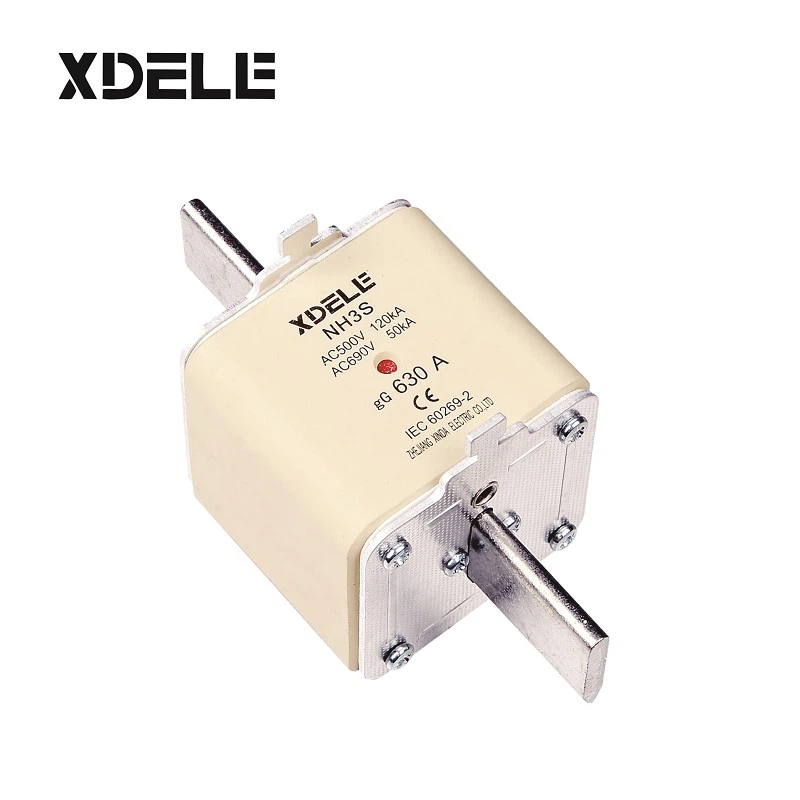
The NH3 with Indicator Fuse Link has an additional feature of an indicator that shows when the fuse has blown. Self - heating can potentially affect the accuracy of this indicator. If the fuse is running hot due to self - heating, it might give a false indication of a blown fuse, or the indicator itself could be damaged by the excessive heat.
So, how can you mitigate the effects of self - heating on NH HRC fuses? First of all, proper installation is key. Make sure the fuses are installed in a well - ventilated area. Good ventilation helps to dissipate the heat generated by self - heating. Also, ensure that the connections are tight. Loose connections can increase resistance and lead to more self - heating.
Regular maintenance is also essential. Check the fuses periodically for signs of overheating, such as discoloration or a change in the physical appearance of the fuse body. You can also use thermal imaging cameras to detect hot spots in the fuse and its surrounding area.
When selecting NH HRC fuses for your application, consider the ambient temperature of the installation site. If the environment is already hot, you may need to choose fuses with a higher temperature rating to compensate for the additional heat.
As a NH HRC fuse supplier, I understand the importance of providing high - quality fuses that can withstand the effects of self - heating. We offer a wide range of NH HRC fuses, including the NT/NH00C Fuse Link, NT/NH0 Fuse Linking, and NH3 with Indicator Fuse Link. Our fuses are carefully designed and tested to ensure optimal performance even in challenging conditions.
If you're facing issues with self - heating in your electrical system or are looking to upgrade your NH HRC fuses, I encourage you to reach out for a procurement discussion. We can help you select the right fuses for your specific needs and provide you with all the technical support you require.
In conclusion, self - heating is a critical factor that can significantly impact the performance of NH HRC fuses. By understanding how it works and taking appropriate measures, you can ensure the reliability and safety of your electrical systems.
References
- "Electrical Power Systems Quality" by Roger C. Dugan, Mark F. McGranaghan, Surya Santoso, H. Wayne Beaty
- "Fuses: Principles, Selection, and Application" by various industry experts in electrical engineering