

As a seasoned energy storage fuse link supplier, I understand the critical importance of choosing the right fuse link for your energy storage systems. A suitable fuse link can protect your equipment from overcurrent, short - circuit, and other electrical faults, ensuring the safety and reliability of your energy storage setup. In this blog, I will share some valuable insights on how to choose the right energy storage fuse link.
Understanding the Basics of Energy Storage Fuse Links
Before delving into the selection criteria, it is essential to understand what an energy storage fuse link is and how it works. An energy storage fuse link is a crucial component in an electrical circuit that is designed to melt and break the circuit when the current exceeds a certain level. This action prevents excessive current from flowing through the system, which could otherwise cause damage to the energy storage devices, such as batteries, and pose a safety risk.
Energy storage systems operate under unique conditions, including high - voltage and high - current environments. Therefore, the fuse links used in these systems must be capable of handling these extreme conditions and providing reliable protection.
Key Factors to Consider When Choosing an Energy Storage Fuse Link
1. Rated Current
The rated current is one of the most important factors to consider when selecting an energy storage fuse link. It refers to the maximum continuous current that the fuse link can carry without melting. You need to determine the normal operating current of your energy storage system and choose a fuse link with a rated current slightly higher than this value. However, it should not be too high, as this will reduce the effectiveness of the fuse in protecting against overcurrent.
For example, if the normal operating current of your energy storage system is 100A, you might choose a fuse link with a rated current of 125A. This margin allows for minor fluctuations in the current while still providing reliable protection.
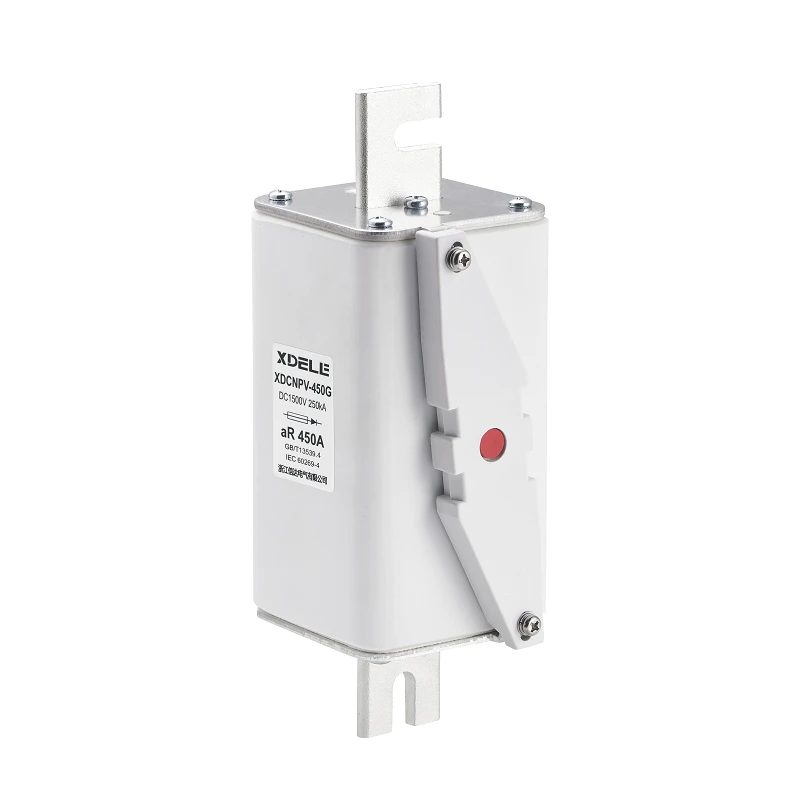
2. Voltage Rating
The voltage rating of the fuse link is also crucial. It indicates the maximum voltage that the fuse can safely interrupt when it blows. In energy storage systems, high - voltage levels are common, so you must ensure that the fuse link you choose has a voltage rating that matches or exceeds the system voltage.
Using a fuse link with a lower voltage rating than the system voltage can result in arcing and other electrical hazards when the fuse blows. On the other hand, a fuse link with an extremely high voltage rating may be more expensive and physically larger than necessary.
3. Breaking Capacity
The breaking capacity, also known as the interrupting rating, is the maximum fault current that a fuse link can safely interrupt without causing damage to the surrounding equipment. In energy storage systems, short - circuits can generate extremely high currents. Therefore, it is essential to choose a fuse link with a high breaking capacity to ensure reliable protection.
The breaking capacity is typically specified in amperes (A) at a certain voltage. For example, a fuse link may have a breaking capacity of 100,000A at 400V. Make sure to check this specification and choose a fuse link with a breaking capacity that can handle the potential fault currents in your energy storage system.
4. I²t Rating
The I²t rating of a fuse link is a measure of the energy that the fuse can withstand during a short - circuit event. It is calculated by integrating the square of the current over the time it takes for the fuse to blow. A lower I²t rating means that the fuse will clear the fault more quickly, reducing the energy let - through to the protected equipment.
In energy storage systems, where fast fault clearing is crucial to minimize damage to batteries and other components, it is advisable to choose a fuse link with a relatively low I²t rating.
5. Response Time
The response time of a fuse link is the time it takes for the fuse to blow once the current exceeds its rated value. There are different types of fuse links with varying response times, including fast - acting and time - delay fuses.
Fast - acting fuses are designed to blow quickly in the event of an overcurrent or short - circuit, providing immediate protection. They are suitable for applications where sensitive equipment needs to be protected from sudden current surges. Time - delay fuses, on the other hand, can withstand short - term overloads without blowing. They are often used in applications where inrush currents are common, such as when starting motors or charging batteries.
In energy storage systems, you need to consider the nature of the load and the potential for inrush currents when choosing between fast - acting and time - delay fuses.
6. Temperature and Environmental Conditions
Energy storage systems can operate in a wide range of temperatures and environmental conditions. The performance of a fuse link can be affected by these factors. For example, high temperatures can cause the fuse link to blow at a lower current than its rated value, while low temperatures can increase its resistance.
You should choose a fuse link that is designed to operate within the temperature and environmental conditions of your energy storage system. Some fuse links are specifically engineered for high - temperature or harsh - environment applications and have features such as heat - resistant materials and moisture - resistant coatings.
The Advantages of Our Eneray Storage Fuse Link
As a leading energy storage fuse link supplier, we offer the Eneray Storage Fuse Link, which is designed to meet the highest standards of performance and reliability.
Our Eneray Storage Fuse Link has a precise rated current and voltage rating, ensuring that it can provide accurate protection for your energy storage system. It has a high breaking capacity, which means it can safely interrupt high - fault currents without causing damage to the surrounding equipment.
In terms of the I²t rating, our Eneray Storage Fuse Link is optimized to provide fast fault clearing, minimizing the energy let - through to your batteries and other components. Whether you need a fast - acting or time - delay fuse, our product portfolio includes a variety of options to meet your specific requirements.
Moreover, our Eneray Storage Fuse Link is designed to withstand a wide range of temperature and environmental conditions. It uses high - quality materials and advanced manufacturing processes to ensure long - term reliability in harsh operating environments.
Conclusion
Choosing the right energy storage fuse link is a critical decision that can have a significant impact on the safety and performance of your energy storage system. By considering factors such as rated current, voltage rating, breaking capacity, I²t rating, response time, and environmental conditions, you can make an informed choice.
If you are in the process of selecting an energy storage fuse link for your project, we invite you to learn more about our Eneray Storage Fuse Link. Our team of experts is always ready to assist you in determining the most suitable fuse link for your specific needs. Contact us today to start the procurement discussion and ensure that your energy storage system is protected by the best - in - class fuse links.
References
- Brown, H. (2018). Electrical Protection Systems: Principles and Applications. Wiley.
- Blackburn, J. L. (2019). Protective Relaying: Principles and Applications. CRC Press.
- IEEE Standards Association. (2020). IEEE Standards for Electrical Fuses in Power Systems.