

Hey there! As a supplier of NH hrc fuses, I often get asked about the heat dissipation of these fuses. So, I thought I'd write this blog to break it down for you in a simple and easy - to - understand way.
First off, let's talk about what NH hrc fuses are. NH hrc stands for "Norms - High Rupturing Capacity". These fuses are designed to protect electrical circuits from overcurrent situations. They're pretty common in industrial and commercial settings because they can handle high short - circuit currents and are quite reliable.
Now, heat dissipation is a crucial aspect of how these fuses work. You see, when current flows through a fuse, it generates heat. That's just basic physics - the resistance in the fuse element causes electrical energy to be converted into heat energy. If this heat isn't dissipated properly, it can lead to all sorts of problems.
One of the main factors that affect heat dissipation in NH hrc fuses is the material of the fuse element. Most NH hrc fuses use materials like silver or a silver - copper alloy. These materials have good electrical conductivity, which means they can carry current with relatively low resistance. Lower resistance results in less heat being generated in the first place. And when less heat is generated, it's easier for the fuse to dissipate that heat to the surrounding environment.
The size and shape of the fuse also play a big role. Fuses with a larger surface area have an advantage when it comes to heat dissipation. A larger surface area allows more heat to be transferred from the fuse element to the air or the mounting structure. That's why you'll often see NH hrc fuses with a design that maximizes their surface area. Some fuses have fins or other protrusions that increase the surface area available for heat transfer.
Another important factor is the way the fuse is installed. Proper installation is key to ensuring good heat dissipation. The fuse should be mounted in a well - ventilated area. If it's installed in a cramped space with poor air circulation, the heat can build up quickly. Air acts as a coolant, carrying away the heat from the fuse. So, make sure there's enough space around the fuse for air to flow freely.
The ambient temperature also impacts heat dissipation. In a hot environment, it's harder for the fuse to transfer heat to the surroundings. The temperature difference between the fuse and the surrounding air is smaller, which slows down the heat transfer process. That's why it's important to consider the ambient temperature when selecting an NH hrc fuse. If you're operating in a high - temperature environment, you might need to choose a fuse with a higher current - carrying capacity to account for the reduced heat dissipation efficiency.
Let's take a closer look at some of our specific products. We offer NH2 with Indicator Fuse Links. These fuses are designed with a built - in indicator that shows when the fuse has blown. In terms of heat dissipation, they're engineered to have an optimized surface area and are made from high - quality materials to ensure efficient heat transfer.
Our NH3 with Indicator Fuse Link is another great option. It's suitable for a wide range of applications and has excellent heat dissipation properties. The design takes into account all the factors we've discussed, like material selection and surface area optimization.
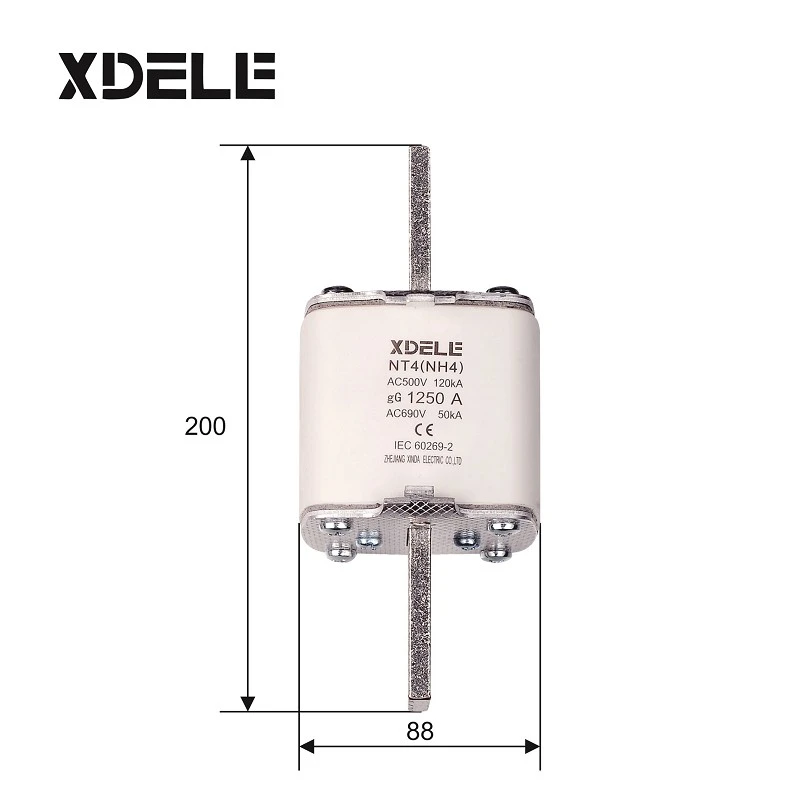
And then there's the NT/NH4 Fuse Link. This fuse is known for its high - performance and reliability. It's built to handle high currents while still maintaining good heat dissipation. Whether you're using it in a small industrial setup or a large commercial facility, it can do the job.
So, why is proper heat dissipation so important for NH hrc fuses? Well, if a fuse overheats, it can cause premature failure. The fuse element might melt or break even when the current is within the normal operating range. This can lead to unnecessary downtime and costly repairs. On the other hand, when heat is dissipated effectively, the fuse can operate safely and reliably for a long time.
We understand that choosing the right NH hrc fuse can be a bit confusing, especially when considering heat dissipation and other factors. That's where our expertise comes in. We've been in the business for a long time, and we know all about these fuses. We can help you select the right fuse for your specific application, taking into account factors like the load current, ambient temperature, and installation conditions.
If you're in the market for NH hrc fuses, we'd love to have a chat with you. We can discuss your requirements in detail and provide you with the best solutions. Whether you need a single fuse for a small project or a large quantity for an industrial installation, we've got you covered. So, don't hesitate to reach out and start a conversation about your NH hrc fuse needs.

References:
- Electrical Engineering textbooks on power systems and protection devices
- Manufacturer's specifications and technical documentation for NH hrc fuses